Growing a baby is hard work. And somewhere between the morning sickness and the sleepless nights, many pregnant women develop another unwelcome companion: sciatica. That deep, shooting pain that starts in the lower back or buttock and travels down one leg.
If this sounds familiar, you are not alone. Sciatica during pregnancy is very common — particularly from the second trimester onwards. The good news is that it is usually very manageable with the right approach, and you do not have to just push through it.
Why does sciatica happen during pregnancy?
A few things are happening at once that can irritate the sciatic nerve:
Your centre of gravity shifts. As your belly grows, your posture changes significantly. Your lower back curves more, your pelvis tilts forward, and your hips take on a different load. This can place pressure on the lumbar spine and sacroiliac joint — both of which sit close to the sciatic nerve roots.
Relaxin is doing its job — a little too well. During pregnancy, your body releases a hormone called relaxin that softens the ligaments around your pelvis to prepare for birth. This is necessary and helpful, but it also means your joints have less stability than usual. The sacroiliac joint in particular can become irritated and contribute to sciatica-like symptoms.
The uterus grows into your sciatic nerve's neighbourhood. In some pregnancies — particularly where the baby is positioned a certain way — the expanding uterus can directly compress the sciatic nerve or the nerves feeding into it, causing that familiar shooting pain into the buttock and leg.
Piriformis tightness. The piriformis muscle, which sits deep in the buttock right next to the sciatic nerve, often tightens during pregnancy as the body compensates for changing posture and weight distribution. When it goes into spasm, it can compress the nerve directly.
What does sciatica feel like during pregnancy?
Pregnancy sciatica typically presents as:
- A shooting, burning, or electric-shock pain that travels from the lower back or buttock into one leg
- Numbness or tingling in the leg, thigh, or foot
- Pain that worsens when sitting for long periods, rolling over in bed, or walking
- Deep buttock pain on one side
- Difficulty finding a comfortable sleeping position
It is worth noting that not all leg pain during pregnancy is true sciatica. Round ligament pain, pelvic girdle pain (PGP), and sacroiliac joint dysfunction can all produce similar symptoms. Getting a proper assessment helps ensure you are managing the right thing — and the right way.
What may help sciatica during pregnancy
Gentle stretches
Some of the most effective sciatica stretches for pregnancy are positions that open the hip and release the piriformis without putting pressure on the belly:
Seated figure-four stretch: Sit upright on a chair. Cross one ankle over the opposite knee. Gently lean forward from the hips (not the back) until you feel a stretch in the outer buttock. Hold for 30 seconds each side.
Cat-cow on all fours: A gentle spinal mobilisation that relieves lower back compression. Breathe in, let your belly drop and lift your head (cow). Breathe out, tuck your chin and round your back (cat). Repeat slowly 10–15 times.
Child's pose (modified): Kneel on the floor with your knees wide apart to accommodate your belly. Sit your hips back toward your heels and stretch your arms forward along the floor. Hold for 30–60 seconds.
Always move slowly and stop anything that increases leg symptoms.
Movement and position changes
Prolonged sitting is one of the most common aggravators of pregnancy sciatica. Getting up and moving every 30–45 minutes — even just a short walk — can make a significant difference. When sitting, a small pillow behind the lower back helps maintain the lumbar curve. When sleeping, lying on your side with a pillow between your knees takes pressure off the pelvis and lower back.
Warm (not hot) heat
A warm heat pack applied to the lower back or buttock — not hot, and kept away from the abdomen — may help ease muscle tension contributing to sciatica pain. Avoid ice packs directly over the belly.
Chiropractic care during pregnancy
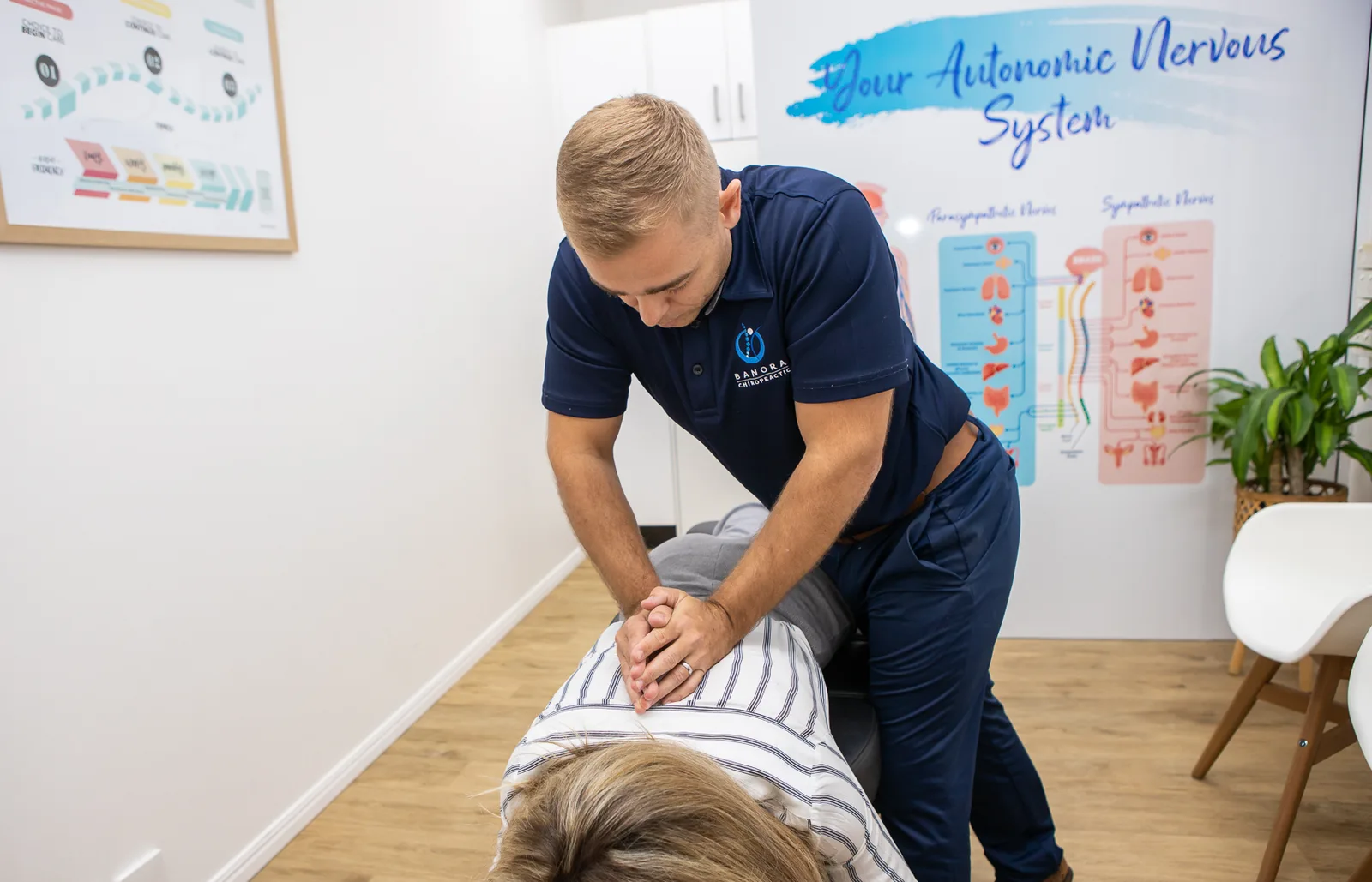
Chiropractic care is a common approach to managing sciatica and hip pain during pregnancy. At Banora Chiropractic, we use gentle, pregnancy-safe techniques that do not require you to lie on your stomach. Treatment is adapted to each trimester and each individual.
Care may include gentle sacroiliac and pelvic adjustments to restore joint alignment, soft tissue work on tight hip and piriformis muscles, guidance on positions and movements to avoid during flare-ups, and specific exercises tailored to pregnancy.
Both Dr Paul and Dr James have experience caring for pregnant patients across all trimesters. We see many mums-to-be from Tweed Heads South, Banora Point, Kingscliff, and across the Tweed–Gold Coast area who come in specifically for pregnancy-related back, hip, and sciatic pain.
When to seek help sooner
Most pregnancy sciatica is manageable and resolves after birth. But do seek care promptly if you experience:
- Significant weakness in one leg
- Any loss of bladder or bowel control
- Pain that is rapidly worsening rather than fluctuating
- Sciatica on both sides simultaneously
These are less common but warrant prompt assessment by your midwife, obstetrician, or GP as well as your chiropractor.
Will sciatica go away after birth?
For most women, yes — pregnancy sciatica significantly improves or resolves after birth as posture normalises and relaxin levels drop. However, if the underlying cause (a disc issue, for example) is not just pregnancy-related, it may persist. Getting it properly assessed and managed during pregnancy gives you the best chance of a smooth recovery postpartum.
If you are pregnant and struggling with sciatica or hip pain, we would love to help. Get in touch or book online — we will take good care of you.


 Pregnancy